

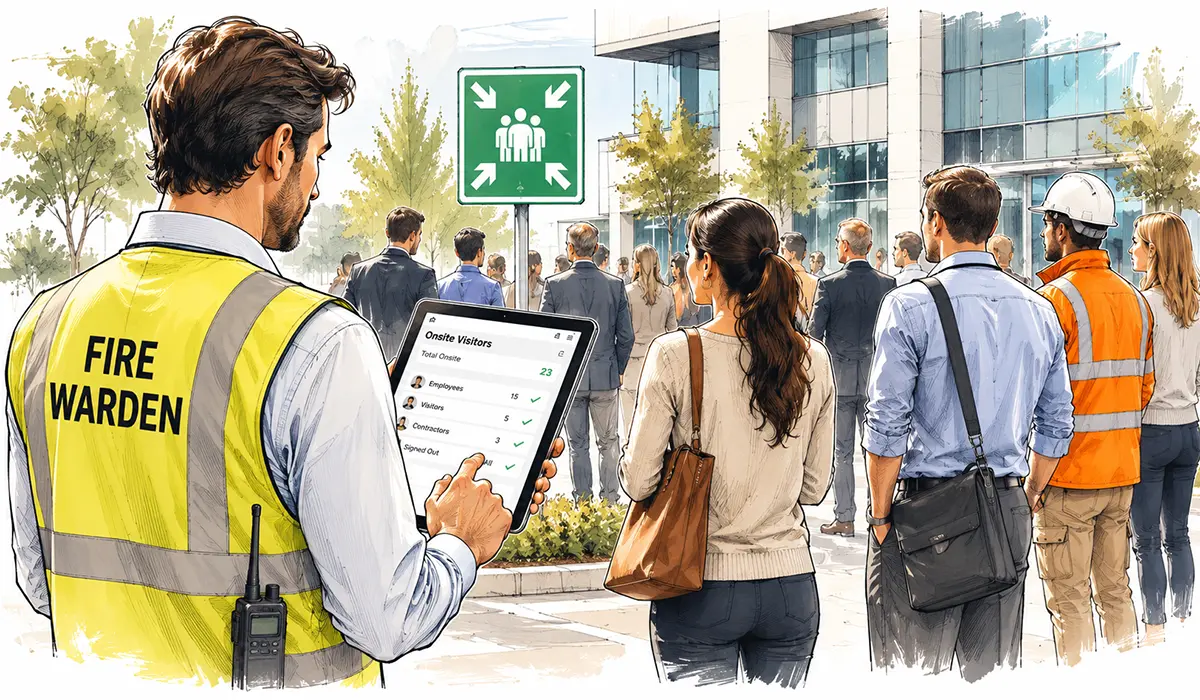
Emergencies can happen without warning. A fire, gas leak, security incident or other workplace emergency can quickly require everyone onsite to evacuate. For employees, established evacuation procedures and designated assembly points may already be in place. Visitors, contractors and other guests can present a different challenge.
Do you know exactly who is onsite? Where are they? Have they evacuated? Is somebody still unaccounted for? A visitor management system can provide the real-time information organisations need to answer these questions and support a safer, more organised emergency response.
Why Visitor Management Matters During an Emergency
Most workplaces know how many employees they have, but the number of people physically onsite can change throughout the day.
Visitors may include:
- Customers and clients
- Contractors and tradespeople
- Delivery drivers
- Consultants
- Volunteers
- Suppliers
- Interview candidates
- Temporary workers
During an evacuation, every person onsite needs to be accounted for.
Traditional paper sign-in books can make this difficult. Records may be incomplete, handwriting can be difficult to read, and the sign-in book itself may still be inside the building when people need it most. A digital visitor management system provides a more practical way to maintain an accurate record of who has entered and left the workplace.
Know Who Is Onsite in Real Time
One of the most important capabilities of a visitor management system during an emergency is real-time onsite visibility. When visitors, employees and contractors sign in and out digitally, their attendance information can be recorded within a central system. Instead of trying to reconstruct who may have been in the building, authorised personnel can quickly access current onsite information.
This can help answer one of the most important questions during an evacuation:
Who still needs to be accounted for?
Having access to current visitor records can help emergency coordinators conduct headcounts at assembly areas and identify people who may require further investigation.
Replace Paper Visitor Books During Evacuations
Paper sign-in books have traditionally been used to keep a record of workplace visitors, but they have several limitations during emergencies.
The register may be:
- Left behind at reception
- Difficult to access during an evacuation
- Incomplete because visitors forgot to sign out
- Difficult to read
- Unable to show information across multiple entrances or locations
A cloud-based visitor management system allows authorised users to access visitor information digitally rather than relying on a physical book located inside the workplace.
This provides greater flexibility when normal workplace processes are disrupted.
Send Emergency Notifications Quickly
Knowing who is onsite is important. Being able to communicate with them is equally important. Modern visitor management systems can capture contact information during the sign-in process and support emergency communications when required.
Teamgo Visitor Management System, for example, supports emergency alerts that can be sent to visitors and employees through email and SMS.
This gives organisations another way to provide important information during an incident, including:
- Evacuation instructions
- Assembly point information
- Safety updates
- Areas to avoid
- Instructions about when it is safe to return
- Changes to normal workplace access
Emergency notifications can complement alarms, wardens and established workplace emergency procedures.
Account for Visitors and Contractors
Employees are generally familiar with their workplace and its emergency procedures. Visitors and contractors may not be. Someone visiting the workplace for the first time may not know the evacuation route, the location of the assembly area or who they should report to during an emergency. Visitor management systems can help organisations maintain visibility of these people throughout their visit.
Sign-in workflows can also be used to present important safety information when a person arrives, helping them understand workplace requirements before entering the site. This is particularly useful for workplaces with frequent contractors, suppliers or other temporary visitors.
Improve Emergency Headcounts
Once people have reached an assembly area, the next challenge is confirming that everyone has safely evacuated. A current digital visitor record can provide emergency personnel or workplace wardens with information about the people who were recorded onsite immediately before the evacuation. Rather than relying solely on memory, teams have a central record they can work from.
This can make it easier to identify:
- Visitors who have evacuated
- Contractors who were working onsite
- Employees who were present
- People who may still be unaccounted for
Accurate information becomes particularly important at larger workplaces where reception staff, managers and emergency wardens may not personally recognise every visitor.
Support Multiple Workplace Locations
Emergency management can become more complicated when an organisation operates across multiple offices, facilities or sites. A centralised visitor management platform can provide visibility across locations while still allowing individual workplaces to manage their own visitors.
This can be useful for organisations operating:
- Corporate offices
- Schools and universities
- Construction sites
- Healthcare and aged care facilities
- Government buildings
- Manufacturing facilities
- Warehouses and distribution centres
Centralised visitor records can help organisations maintain consistent sign-in and emergency management processes across their workplaces.
Keep More Accurate Visitor Records
Emergency preparedness depends heavily on the quality of the information available. If people enter a workplace without signing in, or leave without signing out, the visitor register may no longer accurately represent who is onsite. Digital visitor management helps simplify this process through tools such as self-service kiosks, QR code sign-in and automated visitor workflows. Making sign-in simple encourages more consistent use and creates a better foundation for emergency reporting.
Visitor Management Is Part of Emergency Preparedness
A visitor management system does not replace emergency alarms, evacuation procedures, trained wardens or an organisation’s emergency response plan. It supports them. When an emergency occurs, having fast access to accurate information can help the people coordinating the response make better decisions. Knowing who entered the workplace, who has left and who may still be onsite provides a clearer picture at a time when clarity matters.
Build a Safer, More Prepared Workplace
Visitor management is about more than welcoming guests at reception. It gives organisations greater visibility of the people entering and leaving their workplaces every day. During normal operations, that improves security, record keeping and the visitor experience. During an emergency, those same records can become an important part of the evacuation process.
With real-time onsite reporting, digital visitor records and emergency notifications, a Visitor Management System can help organisations create a more informed and organised approach to workplace emergency management.
Visitor Management System by Teamgo helps workplaces manage visitors, employees and contractors while providing the real-time information needed to support safer workplaces.
Ready to Improve Emergency Preparedness?
See how Teamgo Visitor Management can help your organisation maintain accurate onsite records, improve visitor visibility and support a faster response during emergencies.