

For decades, arriving at a workplace followed a familiar routine. Visitors walked to reception, gave their name and either signed a paper book or waited for someone to help them check in.
That process is changing.
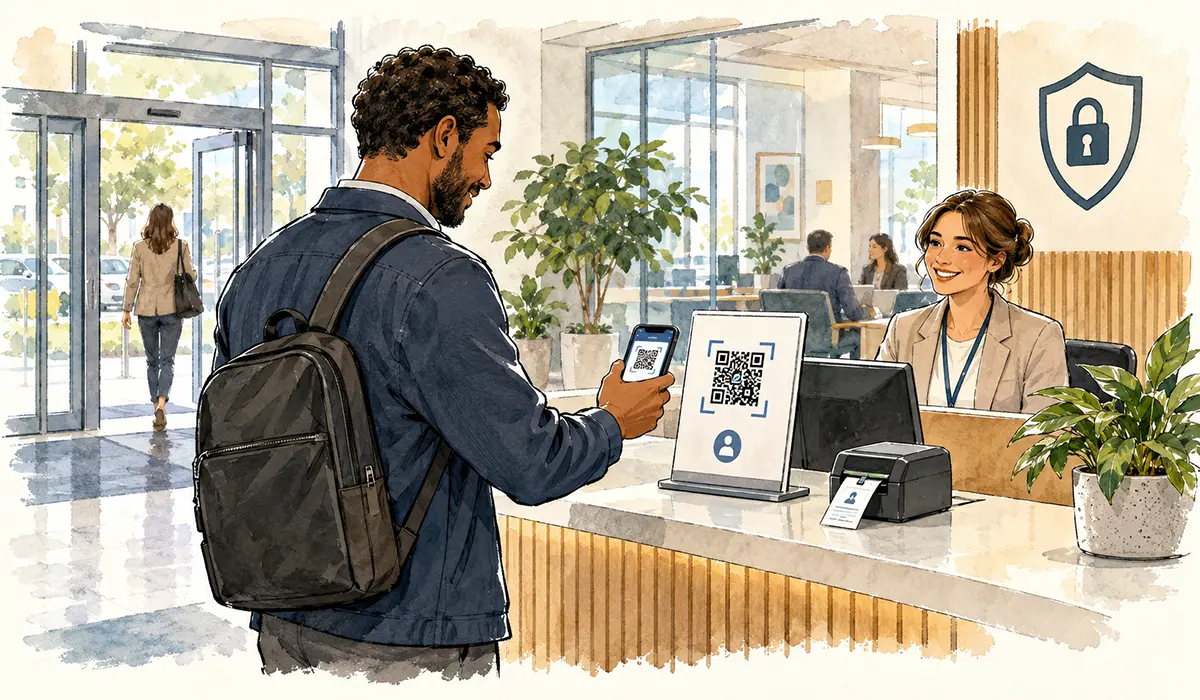
QR codes are increasingly being used to move visitor check-in away from the reception desk and onto the visitor’s own phone. A person arrives, scans a code and completes the sign-in process without needing to touch a shared device or wait for someone to assist them.
It is a simple piece of technology, but it reflects a broader shift in how workplaces think about visitor access.
QR Codes Have Become Familiar
A few years ago, many people needed instructions before scanning a QR code. Today, they are part of everyday life.
People use QR codes for restaurant menus, event tickets, payments, product information and digital forms. That familiarity makes them a natural fit for workplace check-in because there is very little for the visitor to learn.
They point their phone camera at the code, open the link and follow the instructions. For organisations trying to simplify the arrival experience, that matters.
What Actually Happens When a Visitor Scans?
The QR code itself is only the starting point. Its job is to direct the visitor to a digital sign-in process.
From there, the workplace decides what information needs to be collected. That might include the visitor’s name, company, reason for visiting, contact details or the person they are meeting.
Depending on the workplace, visitors may also be shown safety information, privacy notices or site instructions before completing their check-in.
Once the process is complete, the visit is recorded digitally.
The Visitor’s Phone Becomes the Kiosk
This is one of the biggest practical differences between QR sign-in and traditional digital check-in.
A standard visitor management setup may rely on a tablet or touchscreen positioned at reception. QR sign-in moves that interaction onto the visitor’s own device.
That can be useful in workplaces where a single reception kiosk does not make sense. A warehouse might have several entrances. A construction site may have a gate rather than a reception desk. An office may receive a large number of visitors at the same time.
A QR code can effectively create a check-in point wherever one is needed.
Less Waiting at Reception
Reception areas can become congested quickly. One visitor takes longer to sign in, another needs assistance and a contractor may arrive at the same time as a group attending a meeting.
QR sign-in allows multiple visitors to complete the process at the same time using their own phones.
That does not remove the need for reception staff. It simply means reception does not have to personally manage every routine sign-in.
For busy workplaces, that can shift the role of reception from data entry towards actual visitor assistance.
Contactless Does Not Mean Uncontrolled
Making sign-in easier should not mean removing controls.
A visitor who scans a QR code may still need to provide information, confirm who they are visiting or acknowledge workplace requirements.
Some visitor types may require a more detailed process. A contractor, for example, may need to review site rules or complete an induction before entering.
The QR code is simply the doorway into the process. The real control sits behind it.
Different Visitors Can Follow Different Paths
Not everyone arriving at a workplace is there for the same reason.
A client attending a meeting has different requirements from a contractor servicing equipment. A delivery driver may need another process again.
Digital visitor management can allow organisations to create different sign-in journeys for different visitor types.
A general visitor might provide basic details. A contractor may be asked to complete additional steps. A delivery driver might receive instructions about where to go next.
That flexibility is difficult to achieve with a traditional paper register.
QR Codes Can Work Before the Visitor Arrives
QR codes do not necessarily have to sit at the front door.
They can also form part of the pre-arrival process. A visitor might receive check-in information before their appointment or meeting, allowing them to understand what will happen when they arrive.
For organisations that regularly host customers, interview candidates, contractors or event attendees, that can reduce administration and make the arrival experience feel more organised.
The Real Benefit Is the Digital Record
The visible part of QR sign-in is the scan. The more important part happens afterwards.
Once a visitor has completed their check-in, the organisation has a digital record that can show who is onsite, when they arrived, who they are visiting and whether they have signed out.
That information can support reception, security, host notifications, reporting and emergency procedures.
In that sense, QR sign-in is not really about the QR code. It is about creating a digital record with as little friction as possible.
Paper Registers Have a Visibility Problem
Paper sign-in books are simple, but they were never designed for real-time workplace visibility.
The information exists in one physical location. If someone wants to know whether a visitor is still onsite, they may need to return to the register and check it manually.
During an evacuation, the book may still be inside the building.
There is also a privacy issue. Visitors completing a paper register may be able to see information entered by the people who arrived before them.
QR-based sign-in changes that model. Each visitor interacts with their own screen while the organisation maintains the central record.
QR Sign-In Is Not Perfect
There are limitations.
Not every visitor will have a suitable smartphone. Some people may have difficulty using QR codes. Mobile reception or internet connectivity may also be a factor in certain locations.
That is why QR check-in often works best as one option rather than the only option.
A workplace might provide QR sign-in alongside a reception tablet, assisted check-in, pre-registration or a staffed security desk.
The objective should be flexibility rather than forcing every visitor through exactly the same process.
The Front Desk Is Becoming a Process, Not a Place
Perhaps the most interesting thing about QR visitor sign-in is what it says about reception itself.
Visitor management used to be tied to a physical desk. Increasingly, it is becoming a process that can begin before someone arrives and continue wherever they enter the workplace.
The reception desk is still important, but it no longer needs to be the place where every visitor record begins.
A small QR code on a sign can now connect the physical workplace with the organisation’s digital visitor process.
For visitors, the experience may feel almost effortless. For the workplace, that simple scan can create something much more valuable: a clearer record of who has walked through the door.